Brand Ads Without a Film Crew: A Working Approach
What holds up at commercial scale, what does not, and the specific fal.ai models that pass brand review.
Brand Ads Without a Film Crew: A Working Approach
Brand teams are split into two camps on AI video for paid placements. One camp says "everything we do has to be shot by humans on real sets". The other says "ship everything from AI". Both are wrong. The useful answer is a mix, with a clear rule for when each side wins.
Here is the working rule. AI video is great for ads when the focus is on the product, a concept, or a lifestyle vibe. It is not the right tool yet when you need a specific named person on camera, complex dialogue, or legal evidence of a real event. The space in between is the biggest and is where AI earns its place.
What holds up at commercial scale
Three things hold up. Product hero shots with controlled backgrounds. Lifestyle contexts that imply your audience without showing a trademarked face. Abstract concept moments that represent feelings, states, or ideas.
What falls apart is spokesperson work, real customer testimonials, and anything where a human is the load bearing element of the ad. The uncanny edges still show on close ups of hands and eyes. Trust your audience to notice, they do.
Models that pass brand review
Veo 3.1 at $0.40 per second is the only model most brand review processes approve for final delivery without extensive retouching. The photoreal quality and the safety tolerance controls are why. For any ad that will run on broadcast, connected TV, or premium digital, Veo 3.1 is the default.
Wan 2.7 at $0.10 per second handles the mid tier well for social only placements. The quality is above acceptable but below broadcast, and the cost lets you iterate.
Kling v3 Pro at $0.14 per second is where you go for shot sequences. Multi prompt lets you script a shot arc inside a single generation which is exactly what an ad hero moment needs.
For storyboard and pre-vis rounds that you will not deliver, Seedance 2.0 with unit based billing is fine and keeps the review rounds cheap.
Five shot template for a hero ad
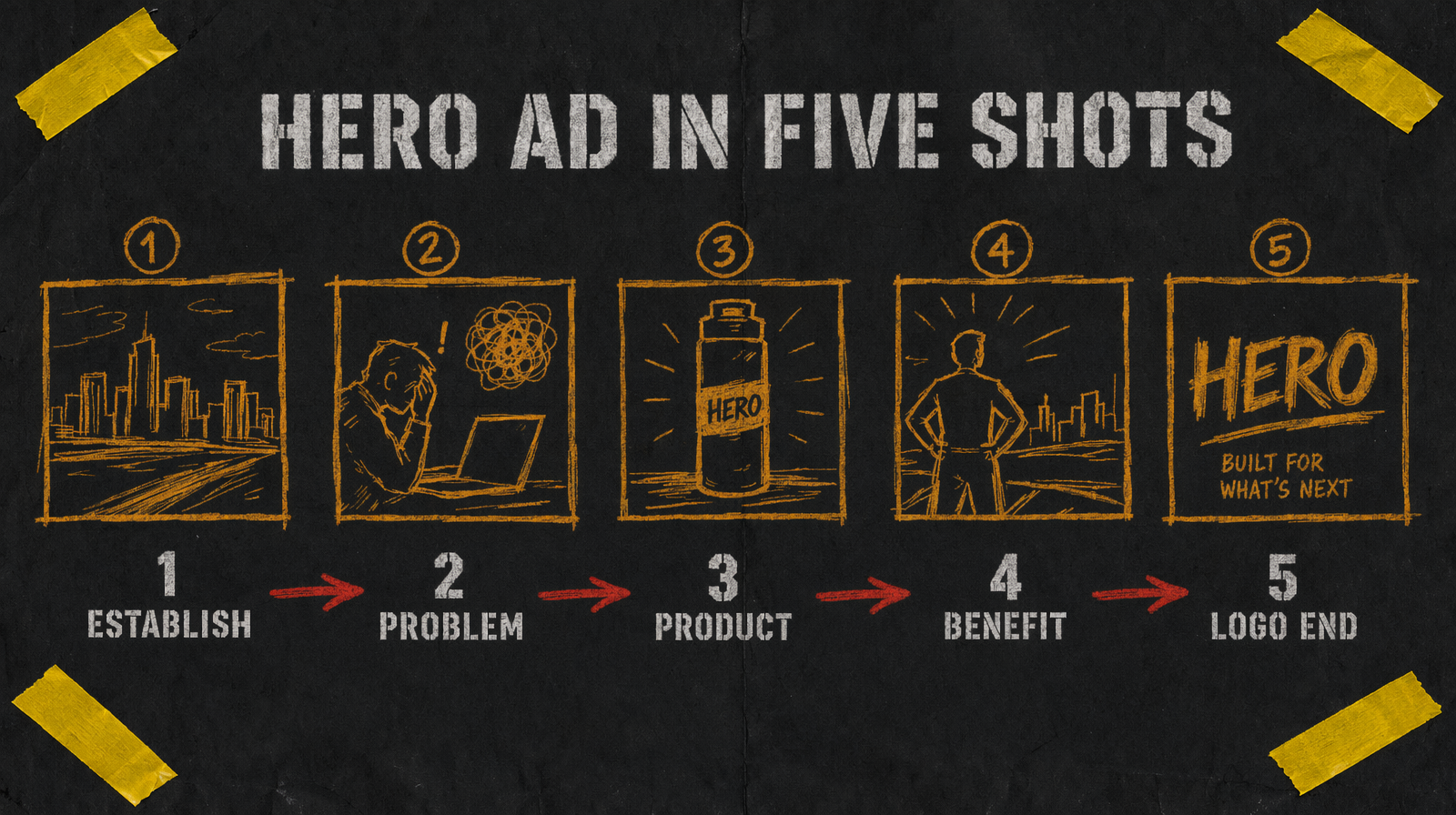
Most brand spots in 15 or 30 seconds fit this structure. Shot 1 is the establish that sets time and place in 2 seconds. Shot 2 is the problem or context in 3 seconds. Shot 3 is the product reveal in 4 seconds. Shot 4 is the benefit demonstrated in 4 seconds. Shot 5 is the logo or end card in 2 seconds.
What brand review will ask you
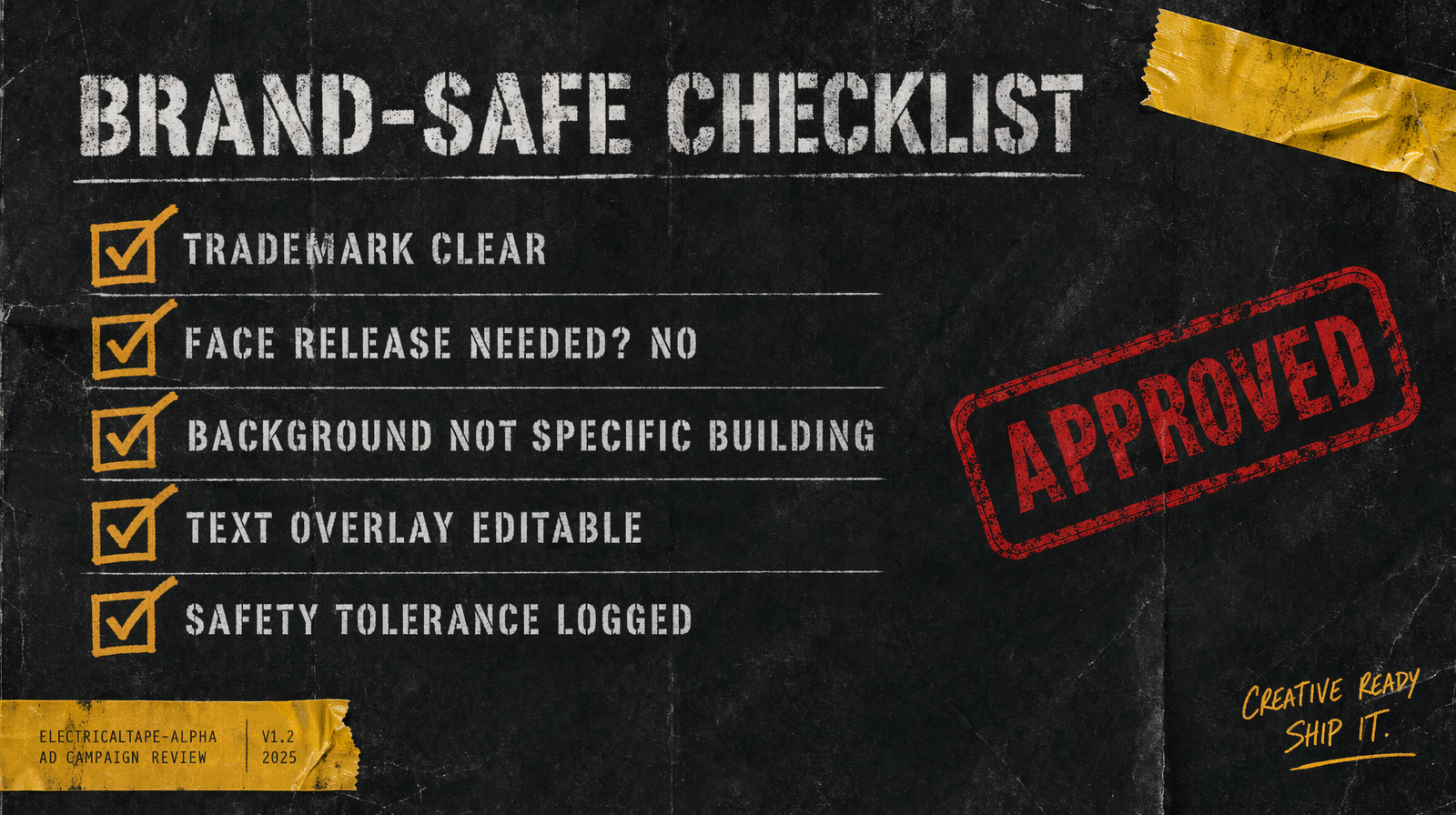
Four questions come up every time. Is there a trademark in the frame that is not yours. Is there a face that reads as a specific real person. Is the background a specific identifiable building you do not have rights to. Is the text on screen a prop or editable overlay.
Answer all four by prompting away from specificity. "A generic modern office" not "a WeWork". "A person in a light sweater" not "a woman in her thirties at a Starbucks". And keep text as overlay, not in the generation.
Cost to produce a 15 second spot
A 15 second ad with five shots, averaging 3 seconds each, using Veo 3.1 on the hero and Wan 2.7 on support shots, lands around $5 to $8 in generation plus iteration. Expect a 2 to 3x multiplier for rounds, so budget $15 to $25 on generation for a reviewed spot. That is before edit time, which you still owe your editor.
Common failure mode
The failure is treating AI as if it replaces the creative direction. It replaces the production crew. The direction still has to be sharp. Brand teams who win with this workflow write the same kind of shot lists and treatments they would for a live action shoot. The shortcut is the shoot day, not the thinking day.
Keep the thinking, skip the crew, and the ads ship.