Budgeting a 30-Clip Campaign Across fal.ai Models
How to estimate true campaign cost before you submit a single generation. Rates, retry budgets, and iteration overhead.
Before you run a single generation, you should know the bill. A 30-clip campaign is where guesses become expensive, because you stack per-second rates across models and forget about retries. Here is the arithmetic you do on a napkin, and then the buffer you keep on top.
The base bill
Thirty clips, average duration six seconds, one model. That is 180 billable seconds.
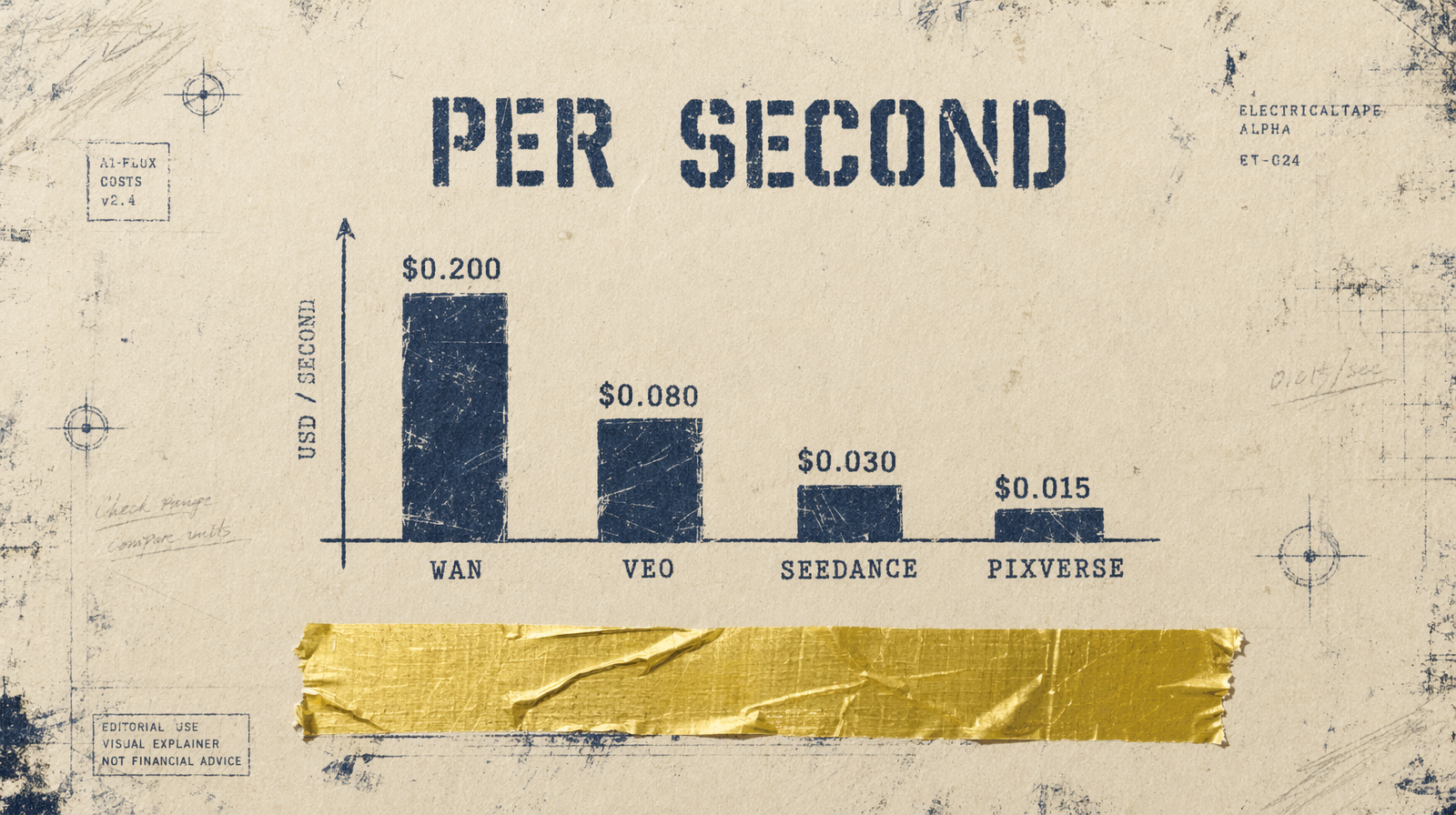
On Wan 2.7 at $0.10 per second, base is $18.00. On Veo 3.1 at $0.40 per second, base is $72.00. On Veo Lite at $0.05 per second, base is $9.00. On Kling v3 Pro at $0.14 per second, base is $25.20. On LTX 2.3 at $0.08 per second, base is $14.40. On Pixverse v6 starting at $0.03/sec (360p no audio, scaling to $0.12/sec for 1080p with audio), base at the cheapest 360p no audio tier is $5.40 (180 x $0.03). On Grok Imagine Video at $0.05 per second, base is $9.00. Seedance 2.0 bills per unit at $0.014, so your math changes; 180 units is $2.52, but a unit is not a second on that endpoint, so check the unit count the endpoint returns.
The retry budget
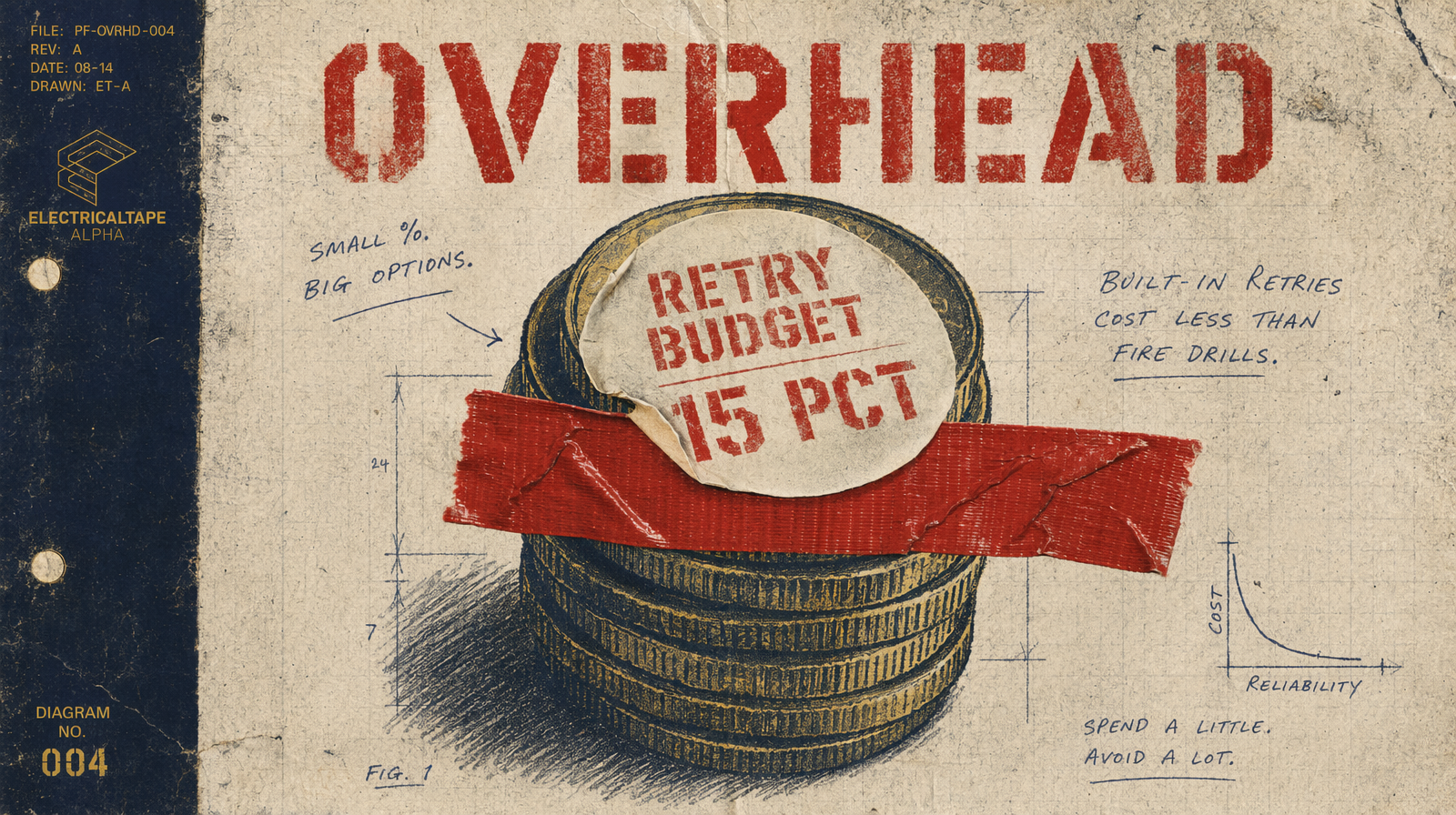
You will rerun clips. The question is how many. If your prompts are locked and your models are warm, plan for a 15 to 20 percent retry rate. If you are iterating on style, plan for 35 to 50 percent. Multiply your base by 1.2 for a mature pipeline and 1.5 for an iteration pipeline.
On Veo 3.1 that means $72.00 base turns into $86.40 mature, $108.00 iterating. On Wan 2.7 that is $21.60 mature, $27.00 iterating.
The hidden overhead
You pay for two things besides the clips. First, your draft passes. If you run a low-resolution Wan 2.7 draft at 720p before you commit to 1080p, you pay that draft cost too. Second, your review iterations, which are short clips you generate to check a look before committing to the real shot.
Budget that overhead as 10 percent on top of your retry-adjusted base. For a Veo 3.1 campaign at $108.00 iterating, that is another $10.80, for a ceiling of $118.80.
A working estimator
1function estimateCampaign({ seconds, ratePerSec, retryFactor = 1.2, overheadFactor = 1.1 }) {2 const base = seconds * ratePerSec;3 return Math.round(base * retryFactor * overheadFactor * 100) / 100;4}56const veo = estimateCampaign({ seconds: 180, ratePerSec: 0.40, retryFactor: 1.5 });7// returns 118.8
Mixing models
A campaign that looks expensive on Veo 3.1 becomes tractable if you run hero shots on Veo and B-roll on Pixverse. Six hero seconds on Veo 3.1 at $0.40 is $2.40. Twenty-four B-roll seconds on Pixverse v6 at the 540p no-audio tier is $0.96. Total: $2.52. Same clip economics as Seedance 2.0, with different visual characteristics. Pick the mix that matches the shot, not the aggregate rate.
When to spend more
If the hero shot needs native audio or 4K, pay the Veo premium. If the hero shot is a lifestyle B-roll loop, Pixverse or Wan handles it for pennies. Campaign budgets are model mix decisions, not model loyalty decisions.